
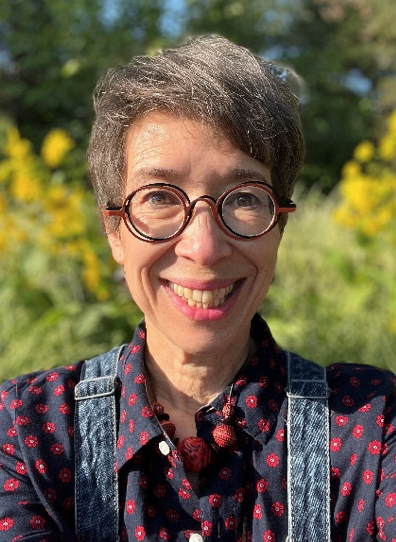
Pia Banzhaf
Pia Banzhaf is an independent puppetry artist, educator, and scholar, currently based in Michigan. She holds a PhD in Cultural Studies, an MA in German Literary Studies, and an MA equivalent in education and German teaching license (Staatsexamen). She has worked in education since 2000, including nine years as Assistant Professor at Michigan State University before transitioning to independent practice in 2024. She has lived and worked in Japan, the US, Canada, Germany, and France. Her puppetry training and interests include contemporary shadow theater, carved puppets, marionettes, object-supported storytelling, and language learning through puppetry. She co-convenes the American Society for Theatre Research Working Group on Puppetry and Material Performance and published a chapter in Routledge's "Making Meaning with Puppets" edited volume.
Statement of Intent:
Born into two worlds–to a Vietnamese mother and a German father, raised in a language that was not the language of the street outside–I have spent my life crossing thresholds: between countries, between teaching and making, between examining how we perceive and creating perception itself.
Puppetry itself exists in the in-between. Between what our hands hold and what our eyes see move with apparent volition. Between the material truth of wood or shadow and the relational truth of presence we create together. Working in these spaces requires a particular kind of fluency. While I speak English and German fluently, French well enough to work across borders, and understand Italian, I think of fluency not just as linguistic competency but a transcultural mindset.
On the board, I would support building bridges, creating pathways between US and European puppetry communities - helping artists find residencies, collaborative partners, performance opportunities in contexts that might otherwise remain foreign territory. Meaningful connection requires structures that can hold difference without flattening what makes each tradition distinct. UNIMA-USA has been building these bridges, and I want to contribute to that ongoing work.
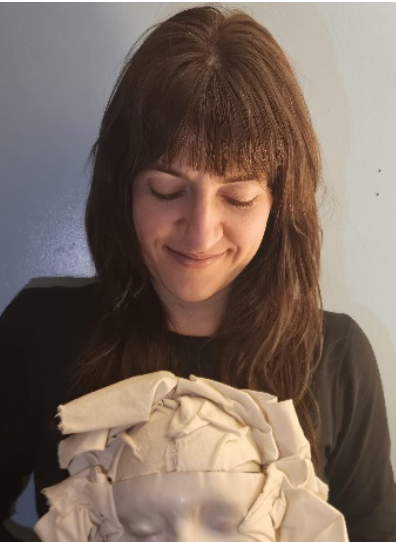
Mackenzie Doss
Mackenzie Doss is a Southwest born writer, fabricator, puppeteer, and educator. She received her MFA from the University of Connecticut Puppet Arts Program in 2022. She currently lives in Vermont where she has been the Managing Director for Sandglass Theater for the past three years. Mackenzie’s experience includes creating the 'Moonface' mask for Shoshana Bass' Feral production, performing as part of the Sandglass Theater ensemble for Oma and the Doppelskope/Sandglass Theater co-production of The Amazing Story Machine, and assisting the Sandglass Summer Intensive Construction Track. She also teaches as a visiting artist for the New England Youth Theatre's Town Schools Program, leads recycled puppet building workshops for rePlay Arts, and performs for local puppet slams. Mackenzie’s body of work includes creating and directing A Eurekan Spectacle (Eureka Springs Arts Council), Assistant Directing Nehprii Amenii’s Food For the Gods (Connecticut Repertory Theatre), Creating and Directing Voices (UCONN Master's Project), and Assistant Directing Conference of the Birds under Eric Bass (New England Youth Theater).
Statement of Intent:
I believe that my experiences as a student, creator and managing director make me a strong bridge between academia, professional puppetry, and casual puppetry. I believe puppeteers are generous creatives. We want to see our work, and the work of our community, grow. This is what I will to bring to UNIMA: my experiences, my generosity, my drive to grow the community and its visibility. I have a strong interest in puppetry education and exploration, to enable students of all ages and backgrounds to explore and make connections through performance, creative relationships, or written contributions to the field. I’m also particularly interested in supporting and uplifting the work of women, non-binary, and trans individuals in puppetry. I have been in the puppetry field for seven years, less than most, more than some. I have had the privilege to learn from and work with some incredible women in our craft: Susan Tolis, Nehprii Amenii, Shoshana Bass, Ines Zeller Bass, Stoph Scheer, Alissa Mello, Theodora Skipitares, Anatar Marmól Gagné, and Sarah Nolen. These individuals, among many not named, have helped me understand the joy and connection inherent in puppetry, the strength of the bridges it can build, and the wonder and change it brings to our lives. I am grateful for the opportunity to run for this board and to give back as much as I’m sure I will learn.

Chris Ignacio
Chris Ignacio is a Filipino-American puppeteer, producer, educator, and interdisciplinary artist whose work centers on storytelling, embodiment, and cultural connection. For more than a decade, Chris has been an active contributor to the American puppetry landscape, creating original works, performing nationally, and collaborating with institutions dedicated to the future of the field. Chris began his puppetry career in New York City, training with experimental artists at La MaMa and working across theater, community arts, and livestream media. His performance work has been presented at venues including La MaMa, The Tank, The Brick, Dixon Place, and national touring festivals. In 2023, Chris made his Metropolitan Opera debut as a puppeteer in Mary Zimmerman’s production of Florencia en el Amazonas. Chris’s artistic practice blends traditional puppetry techniques with emerging technologies such as motion capture, virtual production, and real-time animation. His recent article in Puppetry International explores the evolving relationship between voice, embodiment, and digital avatars, contributing to national discourse on innovation within the field. He is currently developing several multimedia puppetry projects, including a commission from the Phoenix Art Museum, and a puppet web series for children. In addition to his artistic work, Chris is deeply committed to community engagement and education. He has led workshops for youth, schools, and community organizations, emphasizing puppetry as a tool for expression and access. Chris serves as Creative Producer at the T. Denny Sanford Harmony Institute at Arizona State University, where he also teaches motion capture and 3D animation. His teaching bridges performance and technology, offering students new ways to understand the expressive potential of puppetry across media. Chris brings experience in producing, cross-disciplinary collaboration, arts education, and community partnerships, and approaches this work with a steady focus on practical support, clarity, and care for the field.
Statement of Intent
:
As a puppeteer, educator, and interdisciplinary artist working across performance, technology, and community engagement, I am eager to serve on the UNIMA-USA Board to help ensure the art of puppetry remains culturally vibrant, accessible, and interconnected. My priority as a board member would be to strengthen the bridges between traditional puppetry practices and emerging forms, ensuring that artists across generations, disciplines, and geographies see UNIMA as a relevant and supportive home.
One issue I hope to help address is how UNIMA-USA can better support artists who are expanding puppetry into new spaces, such as digital media, virtual production, educational technology, and cross-disciplinary collaboration. As the field evolves, our networks, resources, and visibility must evolve with it. I would advocate for programming and opportunities that uplift artists working at these intersections while maintaining UNIMA’s commitment to the lineage and global heritage of puppetry.
I would also contribute to strengthening outreach and inclusion efforts. Having worked extensively with young people, community organizations, and culturally specific groups, I know personally how puppetry can spark participation from those who may not always feel represented in traditional arts spaces. I would work toward expanding UNIMA-USA’s reach through workshops, partnerships, and initiatives that invite new voices, especially emerging BIPOC artists, youth, and interdisciplinary practitioners, into the national puppetry community.
My background includes more than a decade of professional puppetry experience in New York City, including performances with the Metropolitan Opera, and original devised works presented at La MaMa and other experimental venues. I recently published an article in Puppetry International #58, contributing to the wider discourse on puppetry, embodiment, and technology.
Currently, I serve as Creative Producer at Arizona State University’s Sanford Harmony Institute and teach motion capture and 3D animation at ASU’s MIX Center, supporting students in blending embodied performance with digital tools. I bring skills in producing, organizational leadership, community partnership building, grant writing, interdisciplinary project management, and arts education.
I would be honored to bring these experiences to the UNIMA-USA Board and to help steward the next chapter of puppetry’s growth in the United States.
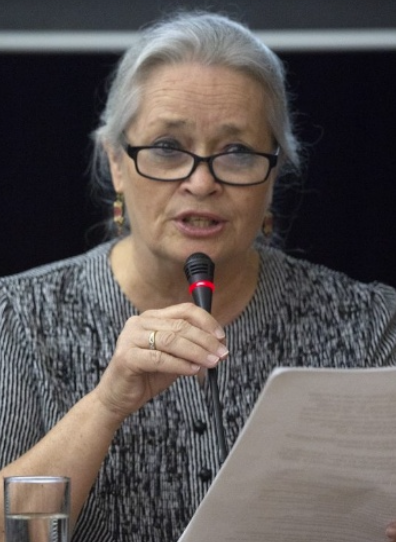
Karen Smith
Karen Smith was a member of UNIMA International’s Executive Committee (2012-2025), serving as its Vice President (2016-2021) and President (2021-2025). She previously was president of UNIMA’s Publication & Communication Commission (2010-2016), its Publication & Contemporary Writing Commission (2016-2021), and was a member of UNIMA’s North America Commission and Research Commission, and is currently a member of UNIMA International’s Asia-Pacific Commission and Heritage Commission. She now serves as co-president of UNIMA’s Publication Commission (2025-2029), focusing again on the enrichment of the organizations’ encyclopedia, a work that entailed, from 2010 to 2017, overseeing preparation of the second edition of UNIMA International’s World Encyclopedia of Puppetry Arts (WEPA), utilizing the original French-language print version, Encyclopédie Mondiale des Arts de la Marionnette, as the point of departure. The expanded, updated, and illustrated encyclopedia was released online in September 2017 in three languages—English, French, and Spanish (the last titled Enciclopedia Mundial del Arte de la Marioneta); see: wepa.unima.org. The trilingual WEPA will now receive its second “update,” in time for UNIMA’s centenary in 2029. In 2021, Karen was named an UNIMA Member of Honor.
Karen is an honorary member of UNIMA Australia, a member of UNIMA-India and UNIMA-USA, having served on the UNIMA-USA Board of Trustees (2007-2014, 2017-2023, 2024-2025) and as its president (2008-2010, 2022-2023). In 2022, Karen received a UNIMA-USA Special Citation for her contributions to puppetry. She is the copy editor of UNIMA-USA’s Puppetry International Research, and a member of the editorial boards of UNIMA-India’s magazine, Sutradhar, and UNIMA International’s new magazine, UNIMAgazine.
Born in Australia and living in California since 2005, Karen has lived for over 25 years in India, Indonesia, the Philippines, Bangladesh, and Costa Rica, where she trained and worked as a puppeteer, designer, and puppet builder. In New Delhi, India, she worked with three separate companies—Shri Ram Centre Puppet Repertory and Ishara Puppet Theatre (both directed by Dadi Pudumjee) and Jan Madhyam (directed by Ranjana Pandey). In Jakarta, Indonesia, she studied Javanese wayang kulit at Sanggar Redi Waluyo under the direction of Pak Kamsu and Sri Rahayu Setyawati. She has contributed reviews and reports of puppet festivals and seminars to journals, has presented papers on Indonesian Wayang and Indian puppetry at various venues in Australia, India, Indonesia, China, and the USA, and has mounted exhibitions of Indonesian Wayang in India and California. As a researcher, in 2007 and 2008 she contributed to two independent photo documentaries highlighting two UNESCO Oral Intangible Heritages of Humanity—Indonesian Wayang and Bhutan’s sacred performance, Drametse Ngacham—as part of UNESCO efforts to conserve world heritages.
Statement of Intent:
Being intimately familiar with the programs, operations, and institutional needs of UNIMA-USA, Karen’s experience and judgment could prove valuable assets as the incoming board moves forward through the next several years. Also, as a past member of UNIMA International’s Executive Committee and currently serving as co-president of its Publication Commission and member of two other commissions, Karen is well perched to share her international perspective and contacts with the UNIMA-USA Board of Trustees.
Marianne Tucker
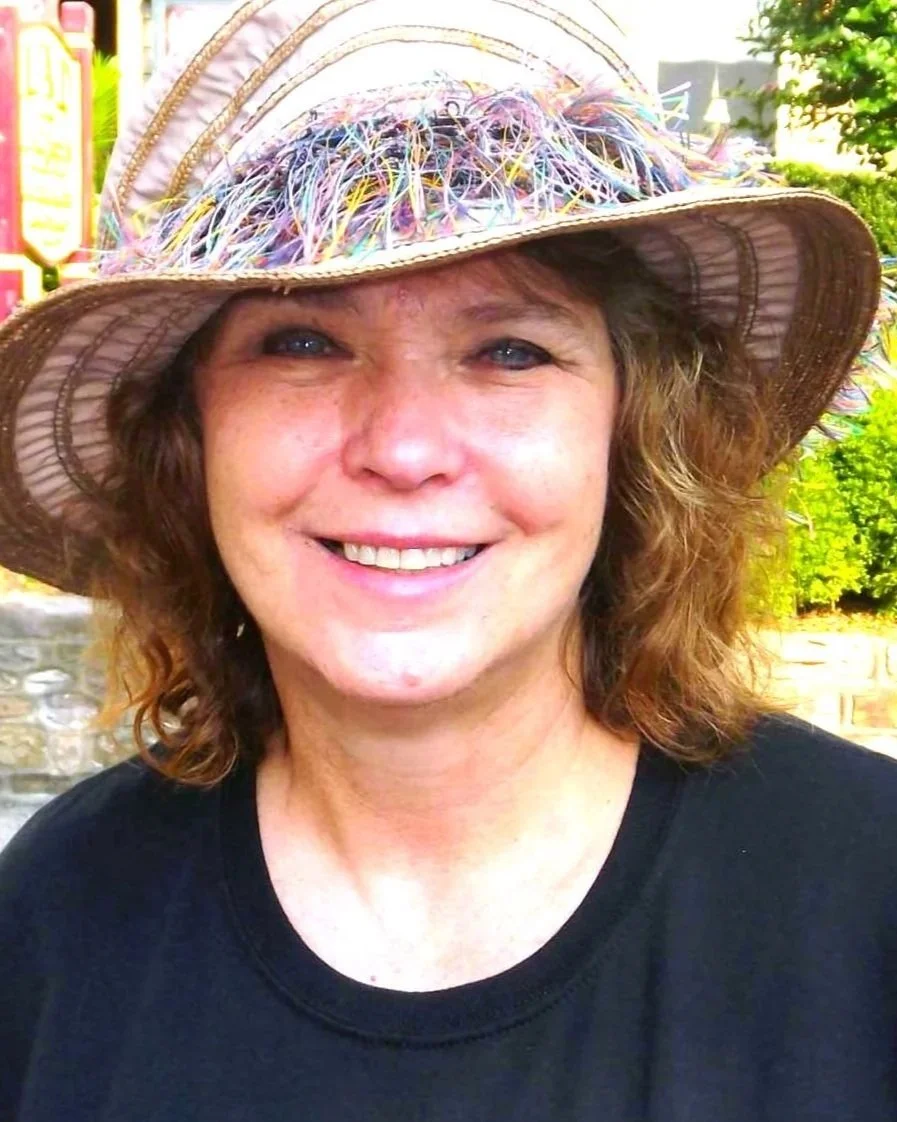
Marianne Tucker has been co-director of Tuckers’ Tales Puppet Theatre since 1981. Shortly after that she joined UNIMA-USA. She was elected to the board the first time in 1999. While on the board she has served as recording secretary and as president from 2003 to 2005 then again in 2014. She also represented UNIMA-USA as councilor at the world puppetry festival and meeting in Croatia, where she also served as recording secretary. When off the board she has chaired the committee for the Citations of Excellence, maintaining the records, managing the reviewers and presenting the awards annually. She also served as chair of the Nominations Committee and on the North America commission of UNIMA. She has had a good and cordial working relationship with the current and past boards and often presents the committee reports at the board meetings.
Tuckers’ Tales Puppet Theatre has performed and presented workshops at Puppeteers of America festivals and many other music and art festivals across the country and Canada.
Statement of Intent
:
After participating in the World Puppetry Day meeting on March 19, I am so proud of where UNIMA-USA is right now. There is a lot of work to be done as we transition to new editors of Puppetry International. The new Puppetry International Research journal is exciting as are the new publications awards named for Nancy Staub. I want to work with the heads of those committees to help them support the scholarship that is now being highlighted. I would like to see the blog re-instated and recruit more authors for it. Some of the theses that received awards this year are available through university and college archives for anyone to read. I want to make sure the links to them are available to UNIMA-USA members. I have a corporate memory from the time I served as board member and can often answer questions about why some things are done as they are, but I also want to want to hear and learn all the wonderful new ideas that are coming out of our board and members.